

In the era of Automation and AI, every industry is evolving. The healthcare sector is also entering a new era where hospitals are no longer dependent only on doctors, nurses and manual systems. Today, technology is transforming patient care through AI, automation, robotics, connected devices and smart healthcare equipment. These innovations are creating Smart Hospitals that reduce errors, enhance efficiency and provide faster and safer medical treatment.
Smart Hospital Technology is the new-age setup. From AI-powered diagnostic machines to automated patient monitoring systems, hospitals are becoming smarter daily. Modern healthcare facilities use digital systems to manage patient records, predict diseases, optimize surgeries and even automate routine administrative work. This change is helping hospitals deliver better patient experiences while reducing operational costs.
With an increase in the demand for error-free diagnostics, faster treatments and personalized healthcare, smart hospitals are becoming the future in the healthcare industry. Healthcare service providers all across the globe are investing in intelligent healthcare infrastructure to improve outcomes and streamline operations.
What is Smart Hospital?
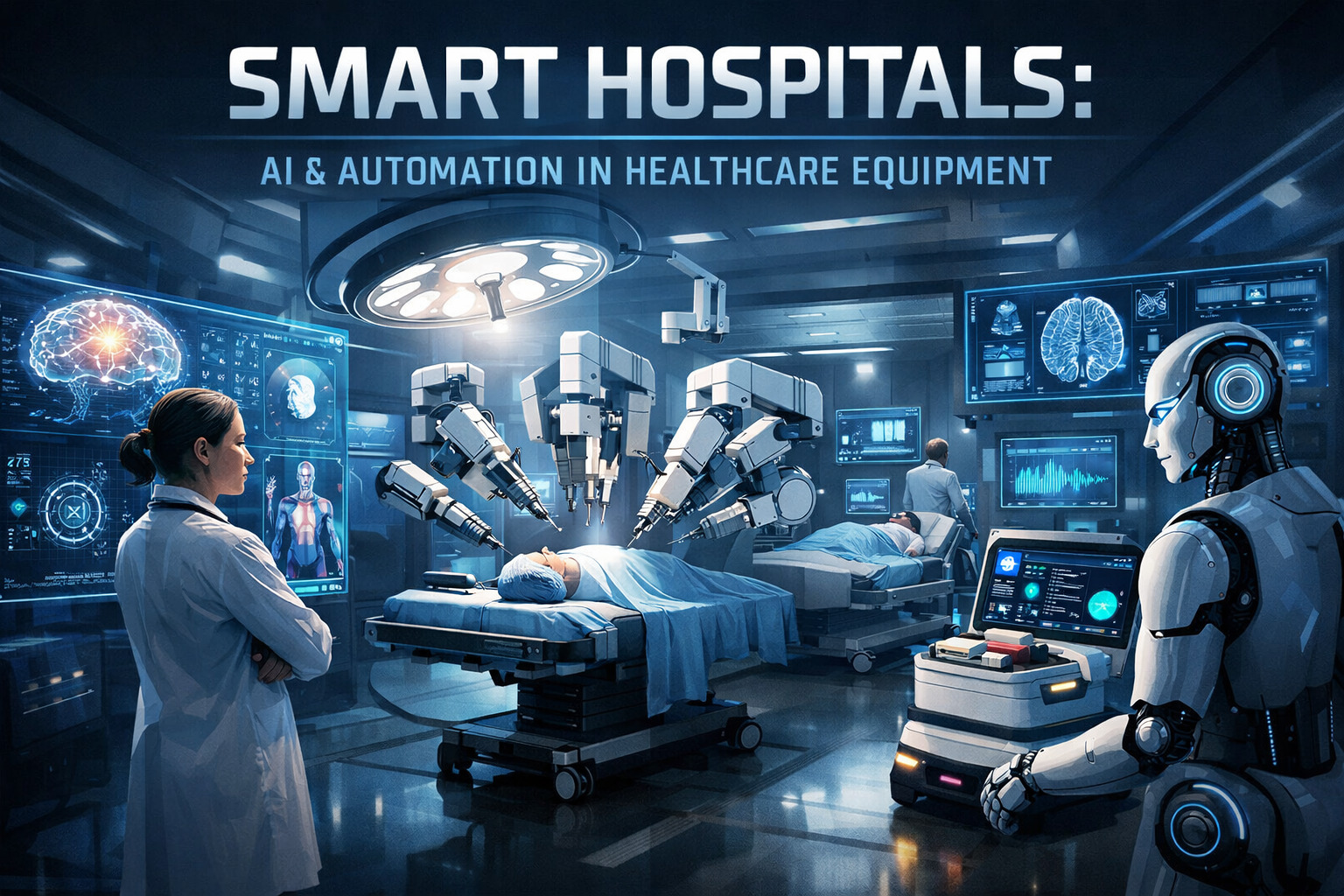
A smart hospital is a healthcare facility that uses cutting-edge digital technologies such as Artificial Intelligence, Internet of Things, automation, robotics, cloud computing and data analytics to improve patient care and hospital management. The hospitals connect medical devices, software systems, healthcare professionals and patients via centralized digital network. The smart hospital easily monitors patients in real-time, automates repetitive tasks, reduces errors and increases clinical decision making.
Some of the important smart hospital technologies include smart ICU monitoring systems, robotic surgery equipment, IoT-enabled wearable health devices, automated hospital inventory management systems and more. These devices have paved the way for digital hospital transformation.
AI Hospitals Concept
AI has revolutionized the work of hospitals across the globe. The integration of AI hospital concepts ensures improved decision making, automation and predictive healthcare management.
- AI-Diagnostics: AI systems can analyze medical images such as X-rays, MRIs, and CT scans with utmost accuracy. They help doctors detect diseases like heart ailments, cancer and neurological disorders earlier than traditional methods.
- Predictive Patient Monitoring: AI-powered systems track patient vitals and alert medical staff before the health condition worsens. This reduces emergency complications and improves patient safety.
- Robotic Surgeries: Robotic surgical systems improve accuracy during complicated procedures. Surgeons can perform minimally invasive surgeries with better control, reduced blood loss and faster patient recovery.
- Virtual Healthcare Assistants: AI chatbots and virtual assistants help patients schedule appointments, answer medical questions and provide medication reminders. This reduces administrative workload and improves patient communication.
- Smart Workflow Automation: AI connected hospital systems helps hospitals streamline their workflow. AI helps the healthcare facilities to manage billing, patient admissions, medical records and inventory control. This increases operational efficiency and reduces manual errors.
Intelligent Healthcare Infrastructure
Intelligent healthcare infrastructure refers to a digitally connected ecosystem where medical devices, software systems, healthcare staff and patient data work together with ease. The hospitals can operate more efficiently while improving patient outcomes.
also read: 20 Medical Equipment Names with Uses
Smart sensors and IoT-enabled equipment collect real-time data from patients and hospital operations. This information is stored in cloud-based systems and is analyzed to support faster medical decisions.
The cutting-edge cybersecurity systems protect sensitive patient records while ensuring secure communication between the departments. Smart healthcare infrastructure supports telemedicine, remote patient monitoring and predictive maintenance of medical equipment. As a result, hospitals provide uninterrupted healthcare services while reducing downtime and operational costs.
What are the benefits of Smart hospitals?
Digitalization is helping hospitals to become more efficient, patient-centric and technologically advanced.
- Increased Patient Care: AI systems help doctors diagnose diseases faster and more accurately. Real-time monitoring improves patient safety and treatment quality.
- Reduced Medical Errors: Automation reduces human errors in medical management, patient record handling and diagnostics.
- Faster Hospital Operations: Digitalization automates routine administrative tasks like registration of patients, billing and appointment scheduling.
- Optimization of Resources: Hospitals can easily track medical equipment, inventory and staff requirement and availability more efficiently via smart management systems.
- Enhanced Data Security: Modern healthcare uses cutting-edge cybersecurity measures to protect confidential patient information.
- Remote Healthcare services: Telemedicine and connected healthcare devices allow doctors to monitor patients remotely and provide virtual consultations.
- Cost-Savings: Automation reduces labour-intensive tasks, reduces equipment downtime and improves overall operational efficiency.
Case Study
A leading multi-specialty hospital in Delhi faced many issues like delays in detecting patient deterioration, high ICU workload and longer patient recovery times. The managed implemented an AI-powered smart ICU system to improve critical patient care.
They worked with an experienced medical equipment supplier and introduced AI-based patient monitoring systems, smart alarm systems, digital patient dashboards, predictive analytics software and automated ventilator management.
After implementation, the hospital experienced many improvements, including faster response to emergency cases, reduced ICU mortality rates, better patient monitoring accuracy, lower equipment downtime and improved nurse efficiency. The doctors also received real-time alerts about patient health changes, allowing immediate intervention when conditions become serious. The paperwork was reduced, and communication improved between departments.
AI and Automation enhanced healthcare delivery while improving operational efficiency and patient outcomes.
Future of Smart Hospitals
The future of hospitals will be driven by smart systems, connected medical devices and AI powered decision making. The state-of-the-art medical AI tools will continue to evolve.
The smart hospitals will play a key role in making healthcare more accessible, accurate and efficient worldwide. Looking to automate our healthcare facility, contact a professional hospital equipment exporter and manufacturer and invest in smart hospital systems and intelligent healthcare equipment to improve patient outcomes, operational efficiency and long-term healthcare success.
FAQs
- What are smart hospitals?
They use AI, automation, IoT and digital technologies to improve patient care, hospital management and operational efficiency. United Poly manufactures AI medical equipment aligned with healthcare facility needs. - How is AI used in hospitals?
AI is used for diagnostics, patient monitoring, robotics, surgeries, predictive analytics, workflow automation and virtual healthcare support. - What are the benefits of hospital digital transformation?
United Poly supports hospital digital transformation with its cutting-edge medical tools. The transformation improves patient care, reduces medical errors, increase operational efficiency and data security, supporting remote healthcare services.
About the Author
United Poly is a trusted Indian manufacturer and exporter of medical equipment. The brand specializes in hospital furniture, medical hardware and sterilization equipment. Backed with more than 40 years of experience, the brand has earned a strong reputation across many global markets.
United Poly holds prestigious certifications, including ISO 9001:2015, ISO 13485:2016, FDA and CE, reflecting its commitment to excellence and compliance.